
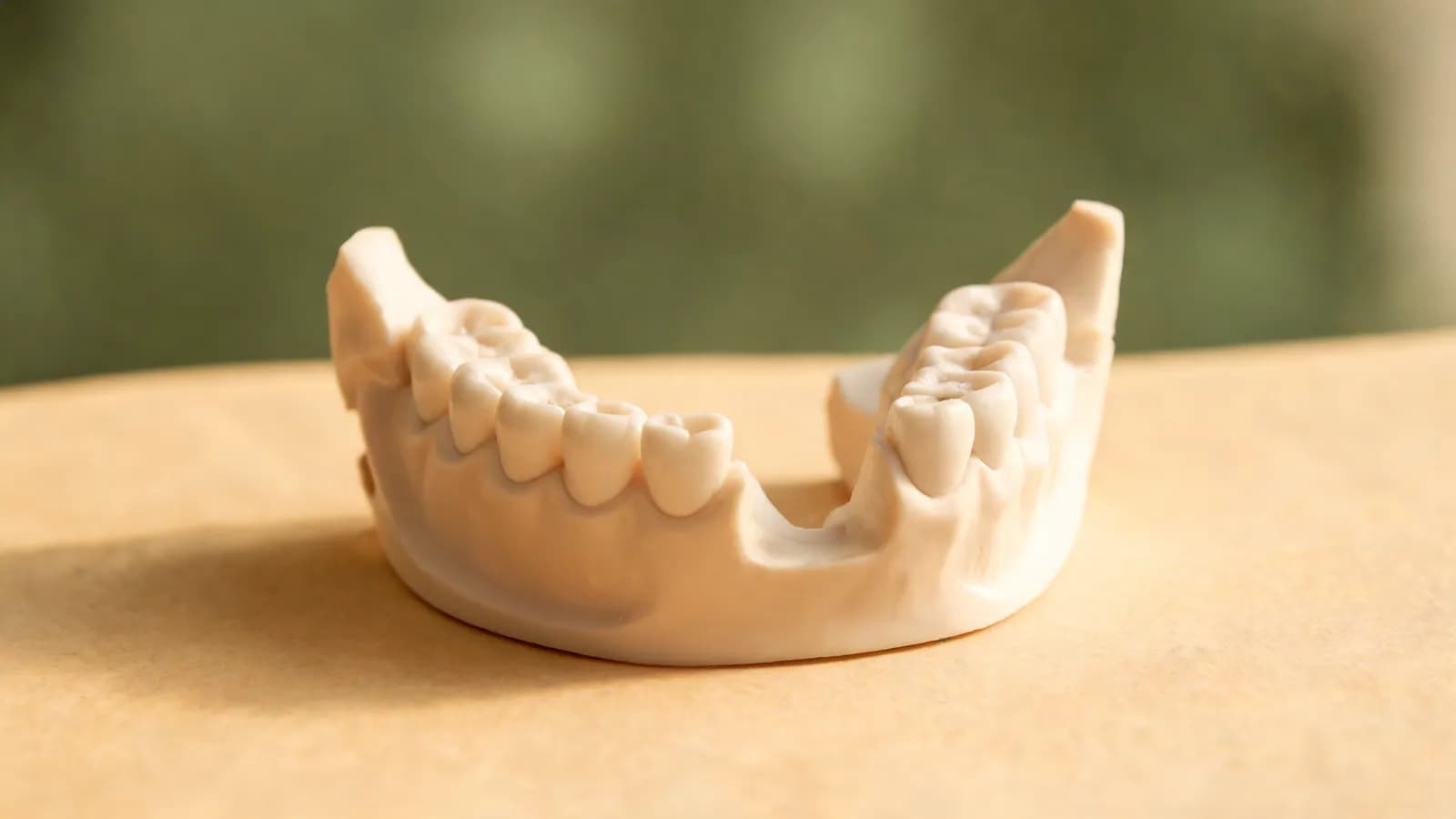
When a tooth has to come out, most people think about the extraction itself: will it hurt, how long will it take, what is recovery like. Far fewer think about what happens to the jaw bone afterward. Yet that is often what decides how easy or difficult it will be to replace the tooth later.
Socket preservation is a small bone graft placed into the empty socket at the same visit as the extraction. Its job is simple: to hold the shape of the ridge while it heals, so that a dental implant or another restoration has a solid foundation when the time comes.
What happens to the jaw after a tooth comes out
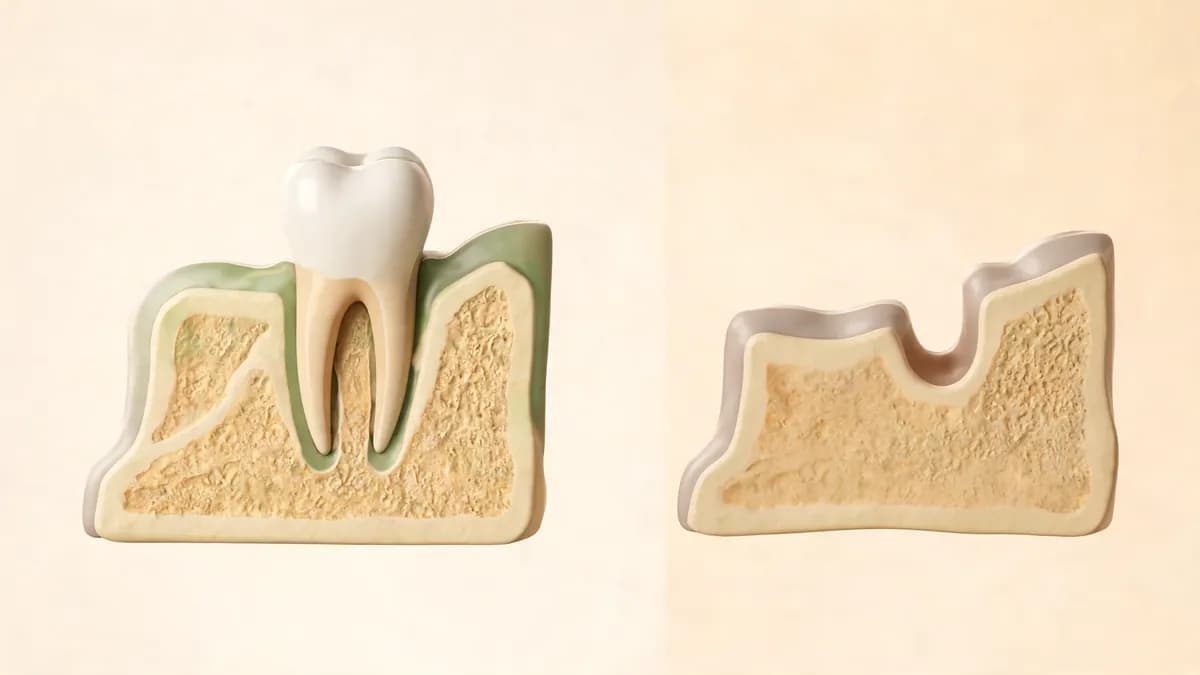
Jaw bone exists to support teeth. The part of the jaw that surrounds the roots, called the alveolar ridge, is maintained by the tooth it holds. When the tooth is removed, that bone begins to resorb, and most of the loss happens in the first year.
The ridge typically gets narrower first and can lose height as well. Long standing gum disease, infection, trauma and long term denture wear can all speed this up. The practical consequence is that a site which would have been straightforward for an implant shortly after the extraction may no longer have the width or height to hold one a year later.
In the front of the mouth there is a cosmetic side too. As the ridge shrinks, the gum follows it, which can leave a visible dip or a tooth replacement that looks longer than its neighbors.
What socket preservation is
Socket preservation, sometimes called ridge preservation, means filling the empty socket with bone graft material immediately after the tooth is removed. The graft acts as a scaffold. Over the following months your body gradually replaces it with its own bone, while the graft helps the ridge hold its original shape.
The graft is usually covered with a protective membrane or a dressing, and the gum is closed over or around it. To you, it feels like part of the extraction. A small socket graft is a minor addition to the procedure and adds little to the recovery.
It is not the same as the larger reconstructive grafts used to rebuild a ridge that has already resorbed, or a sinus lift in the upper back jaw. Those are separate procedures, described on our bone grafting page. Socket preservation is the preventive version, done at the moment it is easiest to do.
Who it is for
Socket preservation is most useful when the tooth being removed is likely to be replaced with an implant, or when the site matters for appearance. Common situations include:
- A tooth that cannot be saved, with an implant planned once the site heals
- A front tooth, where keeping the gum and bone contour matters for how the final tooth looks
- A tooth whose surrounding bone is already thin, where further loss would rule out an implant
- Patients who are not ready to decide on replacement yet but want to keep their options open
It is not always necessary. If a tooth is being removed for orthodontic reasons, or the space will not be restored, a graft may add nothing. The decision is made from your imaging and your plan for the space, and the surgeon will tell you plainly if a graft is not worth doing.
What the graft is made of
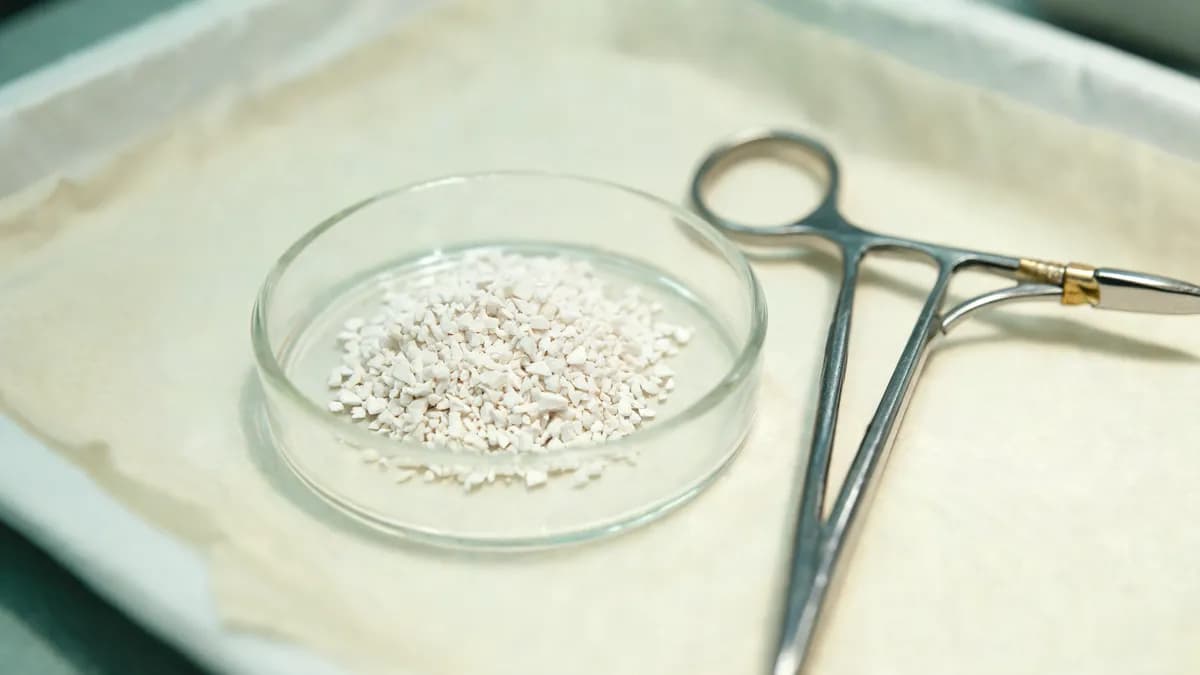
Graft material may be your own bone, processed donor bone, mineral of bovine origin, or a synthetic material. For socket preservation, a prepared particulate graft is commonly used, which means no second surgical site is needed to harvest bone.
Which material is chosen depends on the size of the defect and the job the graft has to do. You should always be told exactly what is being used and why, and you are welcome to ask about the options at your consultation.
The appointment, step by step
Planning comes first. Imaging shows the shape of the bone around the tooth, the position of nearby structures, and whether the walls of the socket are intact. You will also choose your anesthesia, from local anesthesia through to sedation.
On the day, the tooth is removed as gently as possible to protect the surrounding bone. The socket is cleaned, the graft material is placed, and the site is covered and closed. For most single teeth the whole visit is not much longer than the extraction alone.
Aftercare is the same as for an extraction, with a few extra cautions to protect the graft. You may notice a few small granules in your mouth during the first days, which is common. Follow your written instructions, avoid smoking, and call the office if anything does not feel right.
Healing and the road to an implant
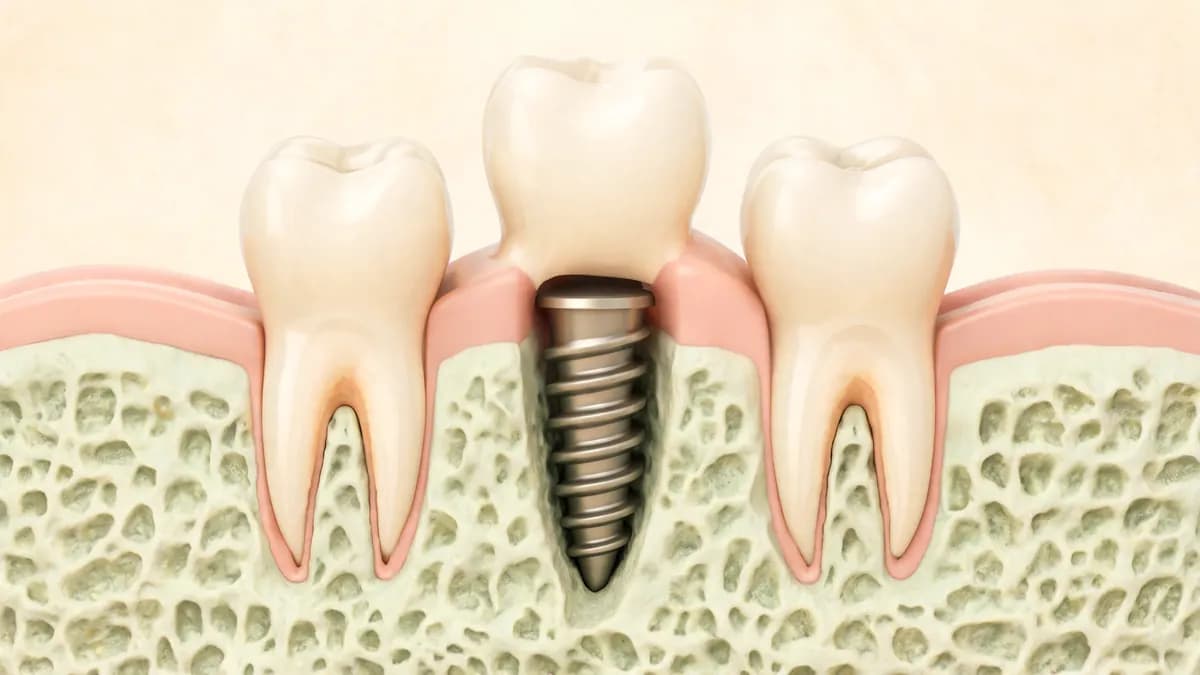
The gum heals over the site within the first few weeks, while the graft matures in the bone underneath over a period of months. Your surgeon will decide when the site is ready based on how it heals and on follow up imaging.
When it is time, the dental implant is placed into the preserved ridge. Integration of the implant usually takes three to six months, after which your restorative dentist attaches the crown. The American Association of Oral and Maxillofacial Surgeons has a good overview of preserving bone for dental implants if you want to read more.
If you have been told a tooth needs to come out, ask about the plan for the space before the extraction, not after. That is the point where socket preservation can still help. You can request a consultation at the Bakersfield or Valencia office.
Common questions
A socket preservation graft placed at the time of extraction generally feels no different from the extraction alone. Larger reconstructive grafts involve more surgery and more swelling.
Sometimes, but waiting usually means more surgery, not less, if the bone shrinks in the meantime. Preserving the socket at the time of extraction is the least invasive point at which to protect the site.
It depends on the site and how it heals. Your surgeon decides when the graft has matured enough, based on follow up examination and imaging.
Socket preservation can still make sense, because it keeps the option open. If the space will never be restored, a graft may not be needed. Talk it through before the extraction.
Nothing in this article replaces an examination. What is right for you depends on your imaging, your medical history and what you want out of the result. Call OAKS in Bakersfield or Valencia, or request a consultation and we will set it out in plain language.
More from the blog

Wisdom Teeth Removal Recovery: A Day by Day Guide
What the first week after wisdom teeth surgery usually looks like, what to eat, how to protect the healing sockets, and when to pick up the phone.
October 5, 20266 min read
Your First Oral Surgery Consultation in Valencia or Bakersfield: What to Expect
A first visit to an oral surgeon is mostly about answers. Here is what to bring, what happens in the room, and what you should know by the time you leave.
October 2, 20265 min read