

Being sent to an oral surgeon can feel like a big step. Maybe your dentist spotted impacted wisdom teeth on an X-ray, a tooth cannot be saved, or you are thinking about an implant. Whatever brought you here, the first appointment is not surgery. It is a consultation, and its job is to give you a clear diagnosis, your options and the cost before anything is decided.
OAKS Oral Surgery has two offices, one on Calloway Drive in Bakersfield and one on Cinema Drive in Valencia. Consultation, imaging, surgery and office based anesthesia all happen in the same building at each location, so the first visit is also a good chance to see where your care will take place. Here is what to expect.
Why people see an oral surgeon
Oral and maxillofacial surgeons are dental specialists who complete years of hospital based surgical training after dental school, including formal training in anesthesia. The American Association of Oral and Maxillofacial Surgeons describes the full scope of the specialty if you are curious. In everyday practice, the most common reasons for a first visit include:
- Wisdom teeth that are impacted, crowding or causing pain
- A tooth that needs to come out, especially one that is broken or difficult
- Planning a dental implant, with or without a bone graft
- A sore, patch or lump in the mouth that needs to be examined
- A bite or jaw problem that braces alone cannot correct
Many patients arrive with a referral from their dentist or orthodontist. If you were referred, the surgical phase is planned in coordination with them, and you go back to your own dentist for the restorative side of your care.

What to bring
A little preparation makes the visit faster and the plan more accurate. Bring:
- Your referral, if your dentist or orthodontist gave you one
- Any X-rays taken in the last year, including a panoramic film or a CBCT scan if one was done
- A full list of your prescriptions, over the counter medications and supplements, with doses
- Your medical history, including past surgery, known allergies and your physician's name
- Your insurance card or plan details
You are welcome to bring someone with you. A great deal is discussed at a surgical consultation, and a second set of ears helps. If the patient is a minor, a parent or legal guardian who can consent to treatment needs to come along.
Allow more time than you would for a routine dental cleaning. The examination, any imaging and the discussion of options all happen at the same visit, and the office will tell you what to expect for your case when you book.

Imaging: panoramic X-rays and cone beam CT
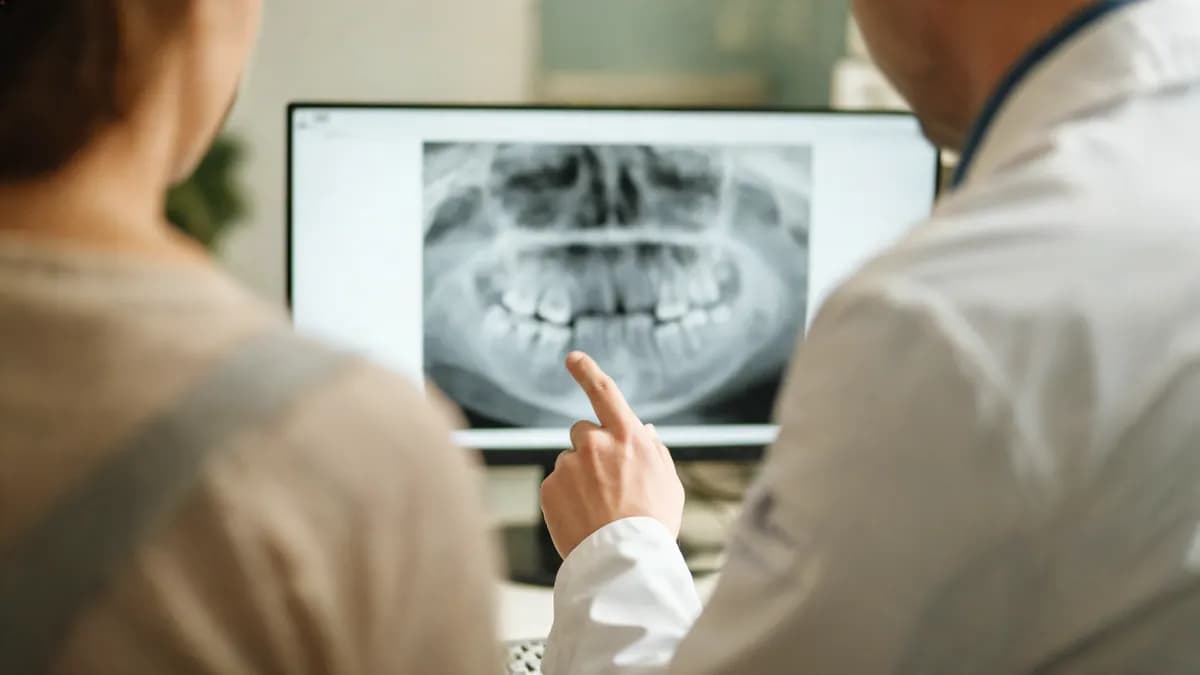
Oral surgery is planned from imaging. At OAKS, imaging is done on site: a panoramic radiograph shows all of the teeth and both jaws in one picture, and a cone beam CT scan adds a three dimensional view where the case calls for one.
That 3D view matters most when a surgeon needs to see exactly where a root sits in relation to a nerve or the sinus, or how much bone is available for an implant. Not every patient needs one. If your dentist already took recent images, bring them, since they may help.
The conversation: diagnosis, options and cost
Once the examination and imaging are done, the surgeon walks you through what they found, in plain language. You should leave the consultation knowing the diagnosis, the options and the cost.
Expect to talk about:
- What the problem is and what happens if you leave it alone
- The treatment options, including when watching and waiting is reasonable
- Your anesthesia choices: local anesthesia, nitrous oxide, intravenous sedation or general anesthesia
- What recovery will look like and how much time to plan off work or school
- What your insurance is expected to cover
On cost, the office verifies your benefits with your plan and reviews the expected cost with you before treatment is scheduled, so you know the number before you commit to anything. If you want to start that process early, call ahead with your plan details.
Write your questions down before you come. Nothing is too small to ask, and it is easy to forget a question once the conversation starts.
Planning around your dentist
Oral surgery is often one step in a larger plan. For an implant, for example, the surgeon places the implant and manages the surgical phase, then hands back to your restorative dentist for the crown. The plan is built backwards from where the final tooth needs to sit.
If you came on a referral, a summary of the consultation goes back to your dentist so everyone is working from the same plan. If you came on your own, you can ask for your records to be shared with your dentist.
Getting to the Bakersfield and Valencia offices
Both offices are open Monday to Friday, 9:00 AM to 5:00 PM.
- Bakersfield: 1010 Calloway Drive, Suite 200B, Bakersfield, CA 93312. Phone (661) 246-3750.
- Valencia: 23501 Cinema Drive, Suite 207, Valencia, CA 91355. Phone (661) 383-2550.
If you will be having sedation or general anesthesia at a later appointment, remember that you will need a responsible adult to drive you home that day, so plan the trip with them in mind. Directions and maps for each office are on the Bakersfield and Valencia location pages.
When you are ready, call the office closest to you or request a consultation online.
Common questions
Usually the first visit is a consultation: examination, imaging and a discussion of options. Whether treatment can happen the same day depends on your case and is something to ask the office when you book.
Many patients are referred by their dentist or orthodontist, and if you have a referral, bring it. If you do not, call the office and they will tell you what they need.
The office verifies your benefits with your plan and reviews the expected cost with you before treatment is scheduled. Bring your plan information, or call ahead so verification can start early.
Allow more time than a routine dental appointment, because the examination, imaging and discussion all happen at the same visit. The office will give you an estimate for your case when you book.
Yes. A family member or friend is welcome, and a parent or legal guardian must come with a minor.
Nothing in this article replaces an examination. What is right for you depends on your imaging, your medical history and what you want out of the result. Call OAKS in Bakersfield or Valencia, or request a consultation and we will set it out in plain language.
More from the blog

Wisdom Teeth Removal Recovery: A Day by Day Guide
What the first week after wisdom teeth surgery usually looks like, what to eat, how to protect the healing sockets, and when to pick up the phone.
October 5, 20266 min read
A Mouth Sore That Will Not Heal: When an Oral Biopsy Makes Sense
Most mouth sores heal on their own within two weeks. This is how to tell when one deserves a closer look, and what an oral biopsy actually involves.
September 24, 20265 min read