
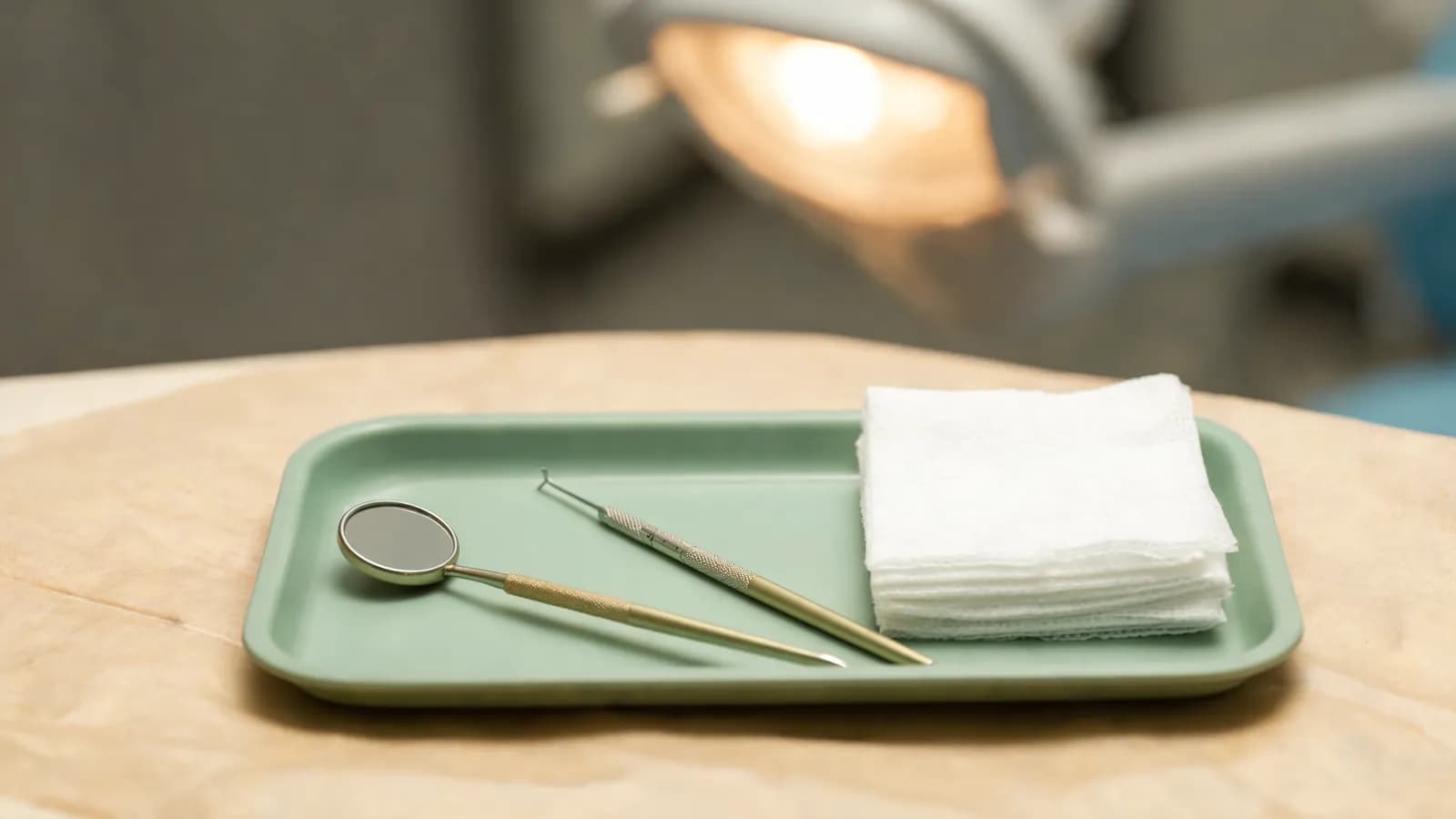
Almost everyone gets a mouth sore now and then. You bite your cheek, burn the roof of your mouth on pizza, or wake up with a canker sore that stings for a week. These are ordinary, and they heal on their own.
Occasionally, though, a sore, patch or lump does not behave like the others. It lingers, it changes, or it simply does not go away. That is when an examination by a specialist, and sometimes a small biopsy, is the fastest way to find out what it is. This article explains which changes are worth having looked at, and what to expect if your dentist suggests a biopsy.
What normal healing looks like
The lining of the mouth heals remarkably quickly. A typical canker sore, a bitten cheek or a minor burn usually improves within a few days and is gone within about two weeks. Along the way it should get smaller and less painful, not larger or more irritated.
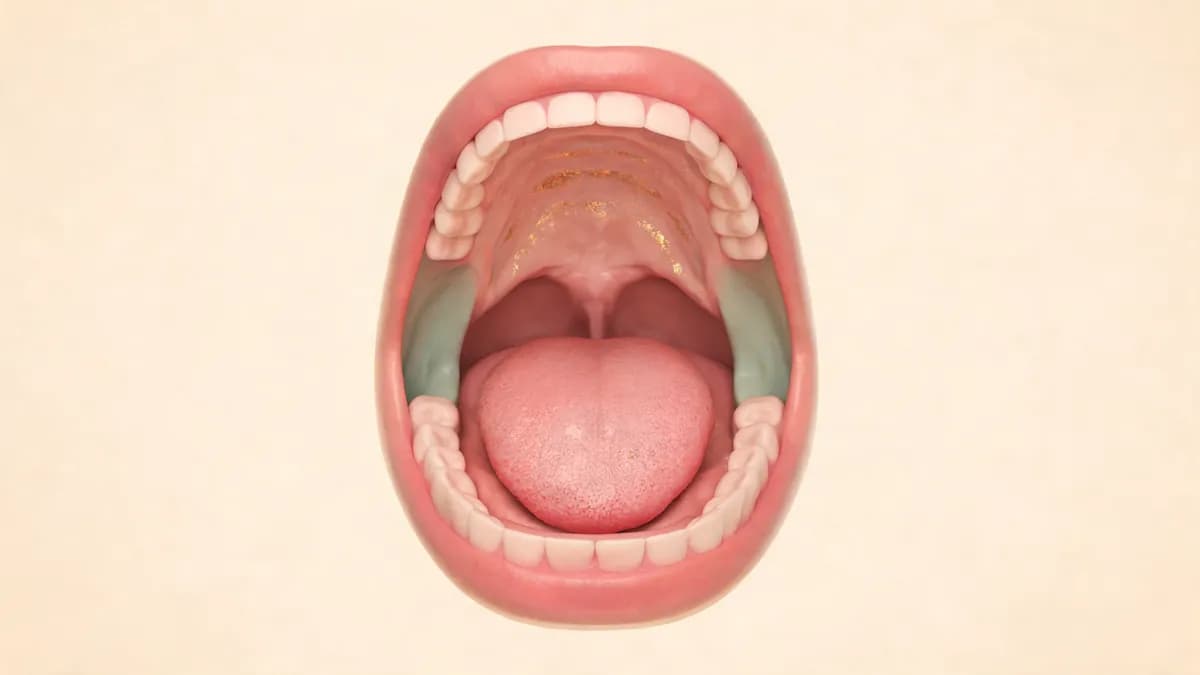
Healthy oral tissue is coral pink, moist and smooth, with some natural variation in color between people. If you know what your mouth normally looks like, it is much easier to notice when something has changed. A quick look in the mirror while you brush, including under the tongue and inside the cheeks, is a good habit.
Changes worth having examined
The two week mark is a useful rule of thumb. Ask your dentist to take a look, or call an oral surgeon directly, if you notice any of the following:
- A sore or ulcer that has not healed within two weeks
- A white or red patch that does not rub away
- A lump, thickening or rough area anywhere in the mouth or on the lip
- A lump in the neck that you have not noticed before
- Persistent numbness of the lip, chin or tongue
- Unexplained bleeding in the mouth
- Ongoing difficulty chewing, swallowing or moving the tongue or jaw
Many of these changes turn out to be benign. Irritation from a sharp tooth or a denture, a blocked minor salivary gland, or a fungal infection can all look worrying and be entirely harmless. The point of an examination is to establish what you are dealing with quickly, rather than to wait and wonder.
Who should pay closer attention
Anyone can develop a lesion in the mouth, but some factors raise the risk of more serious changes. According to the National Institute of Dental and Craniofacial Research, the main ones are tobacco use of any kind, heavy alcohol use, and infection with certain types of human papillomavirus (HPV). Long term sun exposure is a risk factor for cancers of the lip.
If any of these apply to you, it is worth being especially consistent about regular dental checkups and about getting persistent changes looked at promptly. Having a risk factor does not mean something is wrong. It simply means a lingering sore should not be ignored.
What happens at the examination
An oral surgery consultation for a lesion begins with your history: when you first noticed it, whether it has changed, whether it hurts, and your general health and habits. The surgeon then examines the whole mouth, the jaws and the neck, not only the spot that brought you in.
If the lesion involves bone, or sits close to it, imaging may be taken as well. Some lesions inside the jaw produce no symptoms at all and are found on a routine dental X-ray, which is why your dentist may refer you for something you have never felt.
At the end of the visit you will know whether the area simply needs watching, whether an obvious cause such as a rough tooth edge should be fixed first, or whether a sample of tissue is the sensible next step.
How an oral biopsy is done
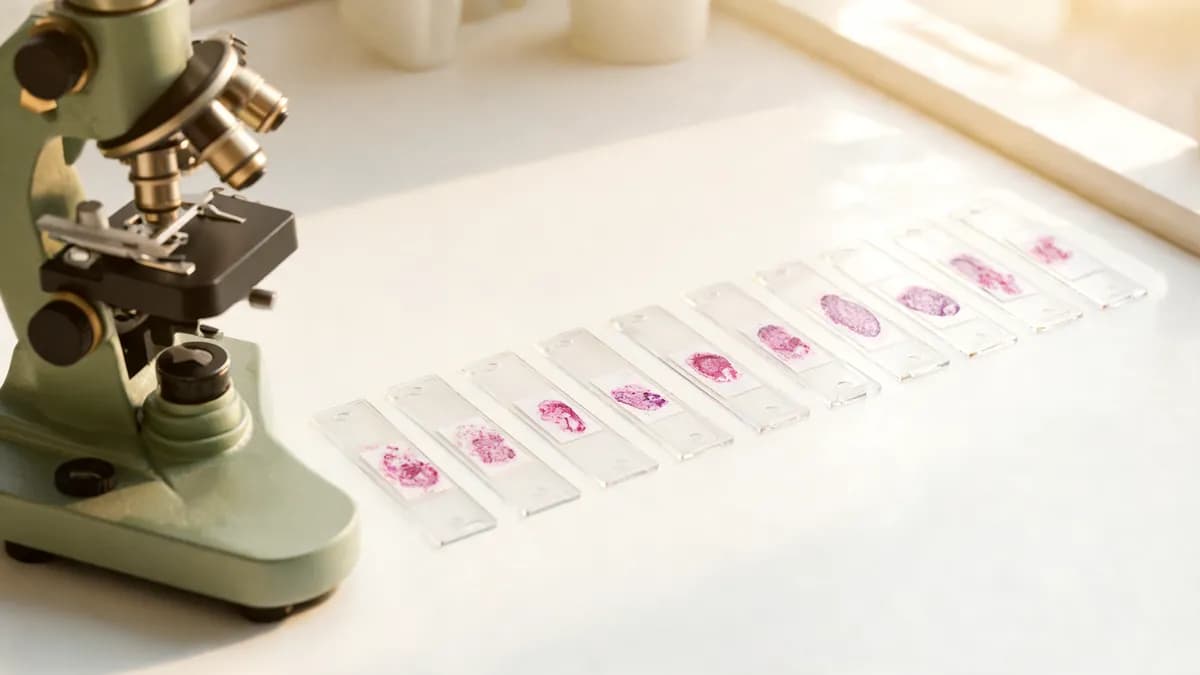
A biopsy means removing a small piece of tissue so it can be examined under a microscope. For most mouth lesions this is a short procedure done in the office under local anesthesia, so the area is numb and you are awake. If you are anxious, ask about the other anesthesia options available for your procedure.
There are two main approaches. An incisional biopsy samples part of a larger lesion. An excisional biopsy removes a small lesion entirely, so the diagnosis and the treatment can happen in one step. Which is appropriate depends on the size and location of the area.
The site is often closed with a few small stitches, and aftercare is usually simple: soft foods for a day or two, gentle cleaning, and avoiding the area while it heals. The tissue is sent to an oral pathologist, a specialist who diagnoses diseases of the mouth and jaws from tissue samples.

Waiting for results, and what comes next
Waiting for a result is often the hardest part. Results are discussed with you directly, and where treatment is needed, the options are set out clearly. Many results confirm a benign condition that needs no further treatment, or only monitoring.
If the diagnosis is something that needs more care, finding it early gives you the most options. The AAOMS explains the difference between oral pathology and oral cancer in more detail.
If you have a sore, patch or lump that has been there for more than two weeks, do not wait for it to become painful. Call the Bakersfield or Valencia office, or request a consultation online, and the surgeon will take a look.
Common questions
Most ordinary mouth sores, such as canker sores or a bitten cheek, improve within a few days and heal within about two weeks. A sore that has not healed by then should be examined.
The area is numbed with local anesthesia first, so you should feel pressure rather than pain during the procedure. Afterward the site is usually mildly tender for a few days.
No. A biopsy is a way to get a clear answer. Many biopsied lesions turn out to be benign, and the result tells you and your surgeon exactly what, if anything, needs to be done.
Many patients are referred by their dentist after a checkup, and if you were referred, bring the referral and any recent X-rays. If you were not, call the office and they will tell you what to bring.
An oral pathologist, a specialist who diagnoses conditions of the mouth and jaws by examining tissue under a microscope.
Nothing in this article replaces an examination. What is right for you depends on your imaging, your medical history and what you want out of the result. Call OAKS in Bakersfield or Valencia, or request a consultation and we will set it out in plain language.
More from the blog

Your First Oral Surgery Consultation in Valencia or Bakersfield: What to Expect
A first visit to an oral surgeon is mostly about answers. Here is what to bring, what happens in the room, and what you should know by the time you leave.
October 2, 20265 min read
Wisdom Teeth Removal Recovery: A Day by Day Guide
What the first week after wisdom teeth surgery usually looks like, what to eat, how to protect the healing sockets, and when to pick up the phone.
October 5, 20266 min read