

Pain and swelling in the gum behind your last molar is very often pericoronitis: an infection of the flap of gum that sits over a wisdom tooth that has only partly come through. It is common in the late teens and twenties, it tends to come back, and the lasting fix is usually removing the tooth or the flap. OAKS Oral Surgery evaluates and treats it at our Bakersfield office, (661) 246-3750, and our Valencia office, (661) 383-2550.
Pericoronitis can be a mild ache that comes and goes, or it can turn into a real infection with swelling, a bad taste and trouble opening your mouth. Knowing which is which matters, because a spreading infection near the throat is one of the few dental problems that should not wait.
This guide explains what causes pericoronitis, the symptoms to watch for, what you can safely do at home, the warning signs that need same day care, and how an oral surgeon decides whether the tooth should come out.
What Pericoronitis Is
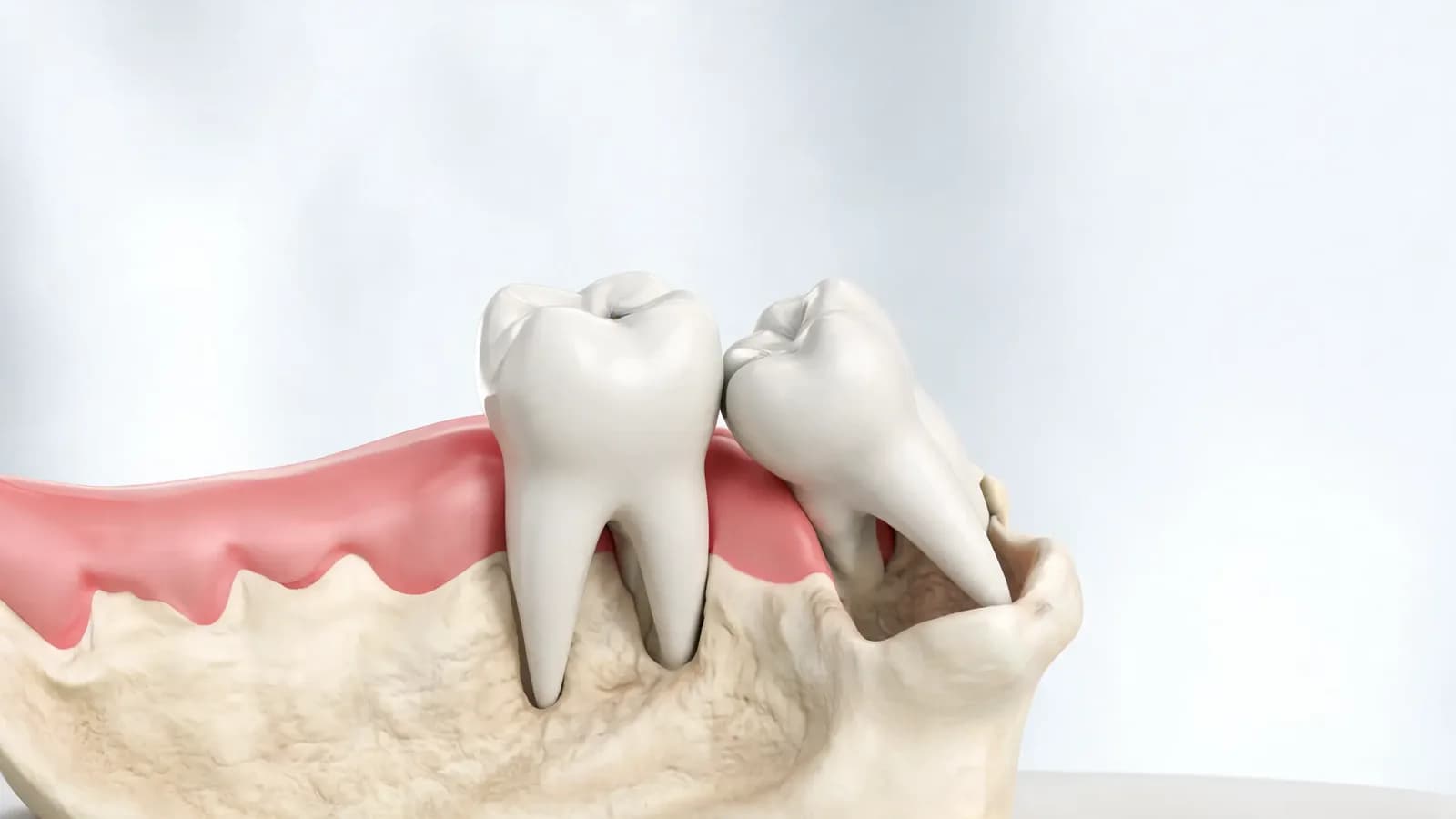
Wisdom teeth, the third molars, are the last teeth to arrive, usually in the late teens or early twenties. When the jaw is short of room, a wisdom tooth may come through only partway. A flap of gum tissue, called an operculum, is left lying over part of the crown.
That flap creates a small pocket that a toothbrush cannot reach. Food and bacteria collect underneath it, the tissue becomes inflamed, and an infection can set in. The name says where it happens: "peri" means around and "coronal" refers to the crown of the tooth.
MedlinePlus describes this pattern in its overview of impacted teeth, noting that a partly emerged tooth can trap food, plaque and other debris in the soft tissue around it, leading to inflammation, tender gums and an unpleasant mouth odor (MedlinePlus: impacted tooth). It most often affects lower wisdom teeth, and it can flare up again and again in the same spot.
Biting makes it worse. The upper wisdom tooth or second molar can come down on the swollen flap every time you chew, bruising it further and keeping the cycle going.
Signs and Symptoms to Watch For
Pericoronitis usually announces itself at the very back of the mouth. Common signs include:
- Pain or tenderness in the gum behind the last molar, often on one side
- A red, swollen flap of gum over a tooth that has only partly come through
- Pain when you bite down, or when the opposing tooth hits the swollen area
- A bad taste or bad breath, sometimes with pus from under the gum
- Pain that spreads toward the ear, the jaw or the throat
- Stiffness or difficulty opening your mouth fully
- Swollen, tender glands under the jaw
Mild pericoronitis may feel like a sore spot that flares up for a few days and settles. That is easy to ignore, and plenty of people do. But each flare is a sign that the tooth is sitting in a position that keeps trapping bacteria, and the episodes tend to return.
What You Can Do at Home Right Now
If the symptoms are mild, with no spreading swelling and no fever, a few simple steps can help calm things down while you arrange an evaluation:
- Rinse gently with warm salt water several times a day, especially after eating
- Brush the area carefully with a soft toothbrush to clear trapped food
- Take an over-the-counter pain reliever as directed on the label, if it is safe for you
- Eat soft foods and chew on the other side
- Drink plenty of water and keep up your normal brushing everywhere else
Home care can make a mild flare more comfortable, but it does not change the reason it happened. The flap and the trapped pocket are still there once the swelling goes down. If you have had this more than once, it is time to have the tooth assessed rather than waiting for the next episode.
When It Is Urgent
Most pericoronitis is uncomfortable rather than dangerous. Occasionally, though, an infection at the back of the jaw spreads into the deeper tissues of the face and neck. That needs care the same day. Call us, or if you cannot reach the office or symptoms are severe, go to an emergency room, if you notice:
- Swelling that is spreading into your cheek, jaw, under the tongue or into the neck
- Difficulty swallowing, or trouble breathing
- Fever, chills or feeling generally unwell
- You can barely open your mouth
- Pain that is rapidly getting worse despite home care
During office hours, surgical emergencies are triaged by phone, so the fastest path is to call: Bakersfield (661) 246-3750, Valencia (661) 383-2550. Spreading swelling with trouble breathing or swallowing is a medical emergency; go straight to the nearest emergency room.
How Pericoronitis Is Treated
Treatment comes in two parts: settling the current flare, then dealing with the cause so it does not keep coming back.
Calming the infection. The area is gently cleaned and flushed to remove trapped food and bacteria from under the flap. If the infection has spread beyond the gum, antibiotics may be prescribed. If the upper tooth is biting into the swollen tissue, that is addressed too. Most flares settle within days once the pocket is clean.
Fixing the cause. Once the acute flare has calmed, the decision is about the tooth itself. That decision comes from imaging. A panoramic x-ray, and where indicated a cone beam CT scan, shows the exact position of the tooth, the shape of its roots and its relationship to the nerve. From there, the options are usually:
- Removing the wisdom tooth, which is the most common lasting solution when the tooth has no room to come in fully
- Removing the upper wisdom tooth if it is biting into the flap and has no useful role
- Removing the gum flap in selected cases where the tooth is upright, has room and will be fully functional and cleanable
- Monitoring a mild, one time episode when the tooth is well positioned
Our wisdom teeth removal page explains how the surgery works, from imaging to recovery. Most patients choose intravenous sedation or general anesthesia, administered in our office, and our anesthesia and sedation page covers every option from local anesthesia upward.

Why It Tends to Come Back, and When Removal Makes Sense
Pericoronitis is a symptom of a tooth that is stuck partway. As long as the flap and the pocket remain, bacteria have a place to collect, and the infection can return with a cold, a stressful week, or simply a bit of food caught in the wrong place. Repeated infection in the same area is one of the classic reasons a wisdom tooth is recommended for removal.
The American Association of Oral and Maxillofacial Surgeons explains that an impacted wisdom tooth can damage neighboring teeth or lead to infection, and that a cyst can form around an impacted tooth (AAOMS: wisdom teeth management). Our guide to signs your wisdom teeth need to come out covers the other warning signs and the cases where a wisdom tooth can safely stay.
Timing matters too. Surgery is generally planned once an active infection has calmed down, and removal before repeated flares have inflamed the area is simpler and more comfortable. If you are planning ahead, our wisdom teeth recovery guide shows what the first week looks like.
If you have a sore, swollen gum behind your last molar right now, or it keeps coming back, book a consultation at either office. Both are open Monday to Friday, 9:00 AM to 5:00 PM: Bakersfield at 1010 Calloway Drive, Suite 200B, and Valencia at 23501 Cinema Drive, Suite 207.
Common questions
Usually a sore, swollen area of gum behind the last molar on one side, often with pain on biting, a bad taste and sometimes pain toward the ear or difficulty opening the mouth.
A mild flare can settle with careful cleaning and salt water rinses, but the flap and pocket that caused it are still there, so it often comes back. Repeated episodes are a reason to have the tooth evaluated.
Not always. Many flares settle once the area under the flap is cleaned. Antibiotics may be prescribed when the infection has spread beyond the gum or you have fever or swelling. Your surgeon will decide based on what they see.
Surgery is generally planned once an active infection has been calmed down. Your surgeon will decide the timing after examining you and reviewing your imaging.
When swelling spreads into the cheek, under the tongue or into the neck, or when you have trouble swallowing or breathing, a fever, or you can barely open your mouth. Call the office the same day, and go to an emergency room if symptoms are severe.
Many patients are referred by their general dentist, but you can also call either office directly: Bakersfield (661) 246-3750 or Valencia (661) 383-2550.
Nothing in this article replaces an examination. What is right for you depends on your imaging, your medical history and what you want out of the result. Call OAKS in Bakersfield or Valencia, or request a consultation and we will set it out in plain language.
More from the blog
Signs Your Wisdom Teeth Need to Come Out
Not every wisdom tooth has to come out. Here are the signs that one is causing trouble, why impacted teeth are a problem, and how the decision is made.
October 12, 20265 min read
Wisdom Teeth Removal Recovery: A Day by Day Guide
What the first week after wisdom teeth surgery usually looks like, what to eat, how to protect the healing sockets, and when to pick up the phone.
September 28, 20266 min read